
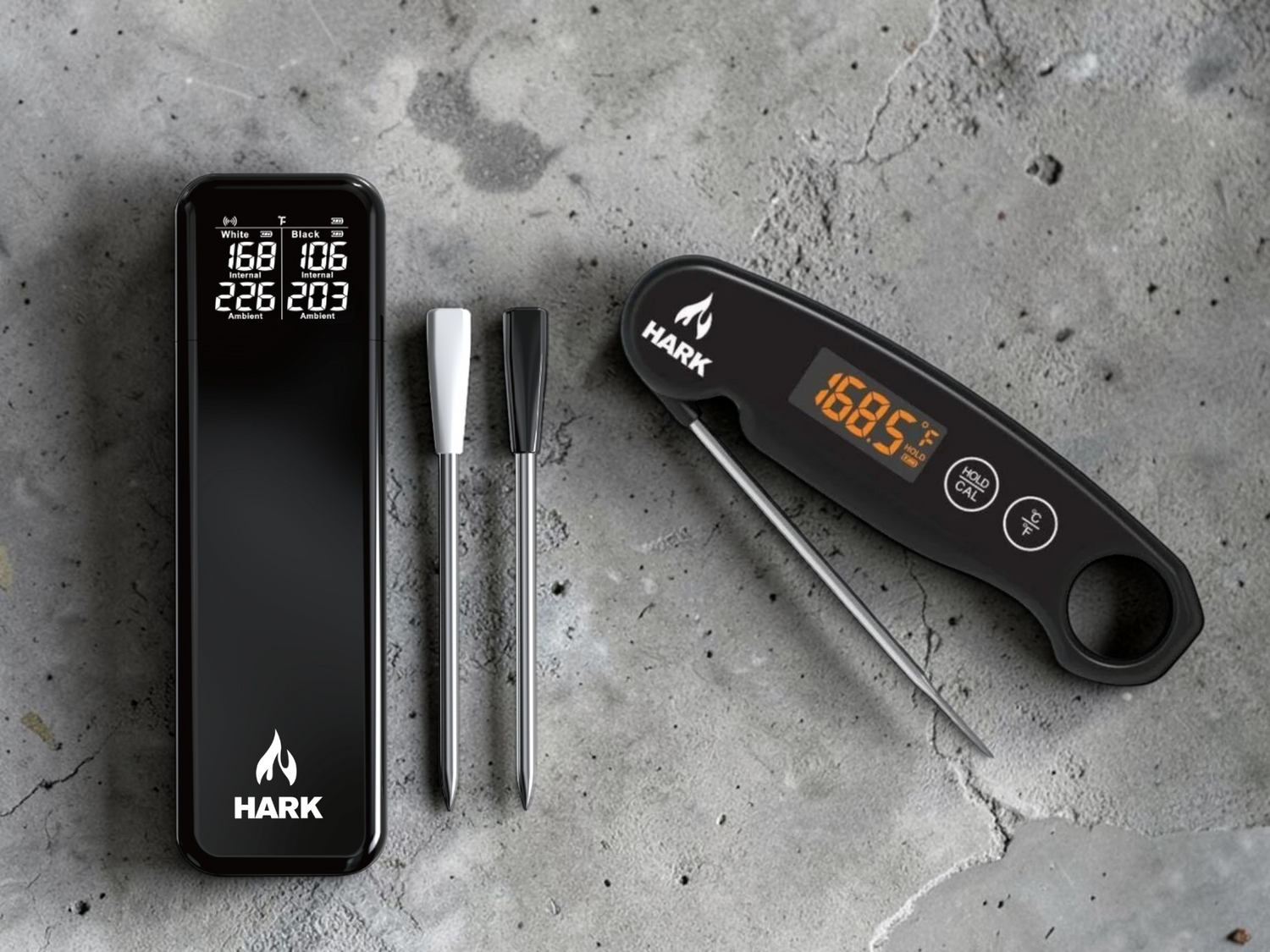
Cooking great BBQ in Australia is equal parts heat control and timing. A wireless meat thermometer takes out the guesswork so you hit safe temps and perfect doneness without lifting the lid. This 2026 buying guide breaks the technology down in plain English, covers what actually matters on Aussie decks and in smokers, and helps you choose with confidence.
What Does "Wireless" Mean in 2026?
Not all "wireless" thermometers work the same way. Know the types before you buy.
Cabled probe + wireless base
Metal probe in the meat, heat-rated cable out to a transmitter or hub. Sends temps to your phone or handheld via Bluetooth, Wi-Fi or RF.
- Pros: Reliable at high pit temps, multiple probes, long cooks.
- Watch for: Cable and probe max-temp limits near flames.
True wireless probes (no cable)
A single probe sits entirely in the food and transmits directly to your phone or hub.
- Pros: No wires, great for rotisserie or pizza ovens, easy to handle.
- Watch for: Lower max ambient limits, must keep the probe handle within its rated exposure range.
Instant-read (handheld)
Not wireless, but essential for quick spot checks and searing. Look for a fast response and a thin tip for small cuts.
Key Features That Matter in Australia
Accuracy and Sensor Type
- Thermocouple probes read faster and stabilise quickly, ideal for steak checks and hot-and-fast cooks.
- Thermistor probes are common in multi-probe sets and are accurate for low-and-slow. They are a touch slower to settle but fine for most BBQ.
Range and Connection
- Bluetooth: Simple and power-efficient. Real-world range can drop around brick walls, metal pergolas and steel smokers. Expect 10-30 m through Aussie homes, more in open backyards. Extender hubs can help.
- Wi-Fi/Cloud: Best for long cooks when you duck to the shops. Needs home Wi-Fi and app support.
- RF handhelds: Old-school radio links with dedicated receivers. Solid range, no phone needed.
Tip: If your BBQ sits under a metal roof, choose a model with a base station you can place outside the heat and closer to your phone or router.
Heat Tolerance and Placement
- Check max probe and cable ratings. Many cables are rated to 380-400°C, but silicone insulation or grommets can be lower. Keep cables off hot plates and away from direct flame.
- For true wireless, respect the probe's ambient limit. Use indirect heat or a deflector on kettles and kamados when possible.
- Ambient pit clips are a must for accurate dome/grill readings.
Power and Safety
- Rechargeable Li-ion or AAA power is convenient. If button cells are used, make sure the battery compartment needs a tool to open and is clearly labelled.
- Auto-off on instant-read saves batteries. For probes, look for low-battery alerts.
Build, IP Rating and Cleaning
- Stainless probes with sealed transitions resist moisture. IPX4+ helps with splashes and outdoor use.
- Probes are hand-wash only unless stated otherwise. Never immerse a cabled transition or wireless handle.
App and Alarms
- Clear graphs, custom high/low pit alarms, and preset meat temps simplify cooks.
- Offline fallback: A unit with an onboard screen or a handheld receiver is handy if your phone dies.
Match Your Thermometer to Your BBQ Style
- Gas BBQs: A 2-4 probe Bluetooth or Wi-Fi set covers roasts and sides. Instant-read for steaks.
- Charcoal kettle: True wireless shines for rotisserie. For indirect cooks, a multi-probe kit with an ambient clip keeps pit temp honest.
- Kamado/ceramic: Favour high heat ratings and robust clips. Wi-Fi helps if the dome blocks Bluetooth.
- Offset smoker: Multi-probe with long cables and an RF or Wi-Fi link. Monitor multiple zones and the brisket flat/point.
- Pellet grill: Many have built-in probes, but a separate set verifies accuracy and adds extra channels.
- Camping: RF handhelds or Bluetooth with long battery life. Avoid cloud-only units off-grid.
How to Use a Wireless Meat Thermometer (Quick Start)
- Charge/power on and pair before you light up.
- Insert into the thickest part of the meat, tip in the core. Avoid bone and large fat seams.
- Use an ambient clip at grate level, away from direct flame.
- Set meat target and pit high/low alarms in the app or receiver.
- Trust the data. Resist constant lid-lifting; it dumps heat and extends cook time.
- Rest meat. Pull just before your target to allow carryover (steak 2-3°C, roasts can rise 3-5°C).
- Clean probes while warm with a damp cloth. Do not soak cabled transitions or submerge wireless handles.
Pro tip: For thick cuts, insert the probe from the side so the tip sits in the geometric centre.
Food Safety and Doneness, Simplified
| Food | Target Internal Temp |
|---|---|
| Poultry and sausages, minced, stuffed or rolled meats | 75°C |
| Pork roasts and whole cuts | About 70°C for safe, juicy slices |
| Beef, lamb, veal whole cuts | 63°C for medium-rare (rest 3 minutes), higher for medium/well |
| Eggs and egg dishes | 72°C |
Always read the thickest part and avoid touching bone.
Price, Warranty and Real-World Costs in 2026
| Type | Typical Price |
|---|---|
| Instant-read | $20-$120 depending on sensor and speed |
| Multi-probe Bluetooth/Wi-Fi kits | $70-$250+ with 2-6 probes, alarms and graphs |
| True wireless probes | $130-$400+ depending on range, number of probes and docks |
Consider spare probes, clips and high-temp grommets. Look for a clear local warranty and easy-to-buy replacement probes.
Pre-Purchase Checklist
- Enough probes for your cooks (meat + ambient).
- Connection type that suits your space (Bluetooth, RF, Wi-Fi).
- Heat ratings that match your BBQ style.
- Fast read thermocouple for handheld checks.
- Secure battery compartment and clear low-battery alerts.
- IP rating or sealing for outdoor use.
- App with custom alarms and offline fallback.
- Readable displays in bright sun.
Browse quality wireless meat thermometers or compare broader options across BBQ thermometers.
Ready to Choose Your Wireless Meat Thermometer?
Have a question about range, probes or what fits your BBQ? Chat with the Hark team for friendly, local advice and product recs. Reach out via Contact us and we will help you dial in your next cook with the right gear.
